
When severe weather strikes, a FORTIFIED Roof keeps the wind and rain out, preventing a cascade of damage that can destroy your home and belongings.
FORTIFIED Roof was specifically designed to prevent damage that commonly occurs during high winds, hurricanes, hailstorms, and severe thunderstorms. No matter what type of roof you have—shingles, metal, or tile—the following FORTIFIED Roof requirements will make your home stronger.
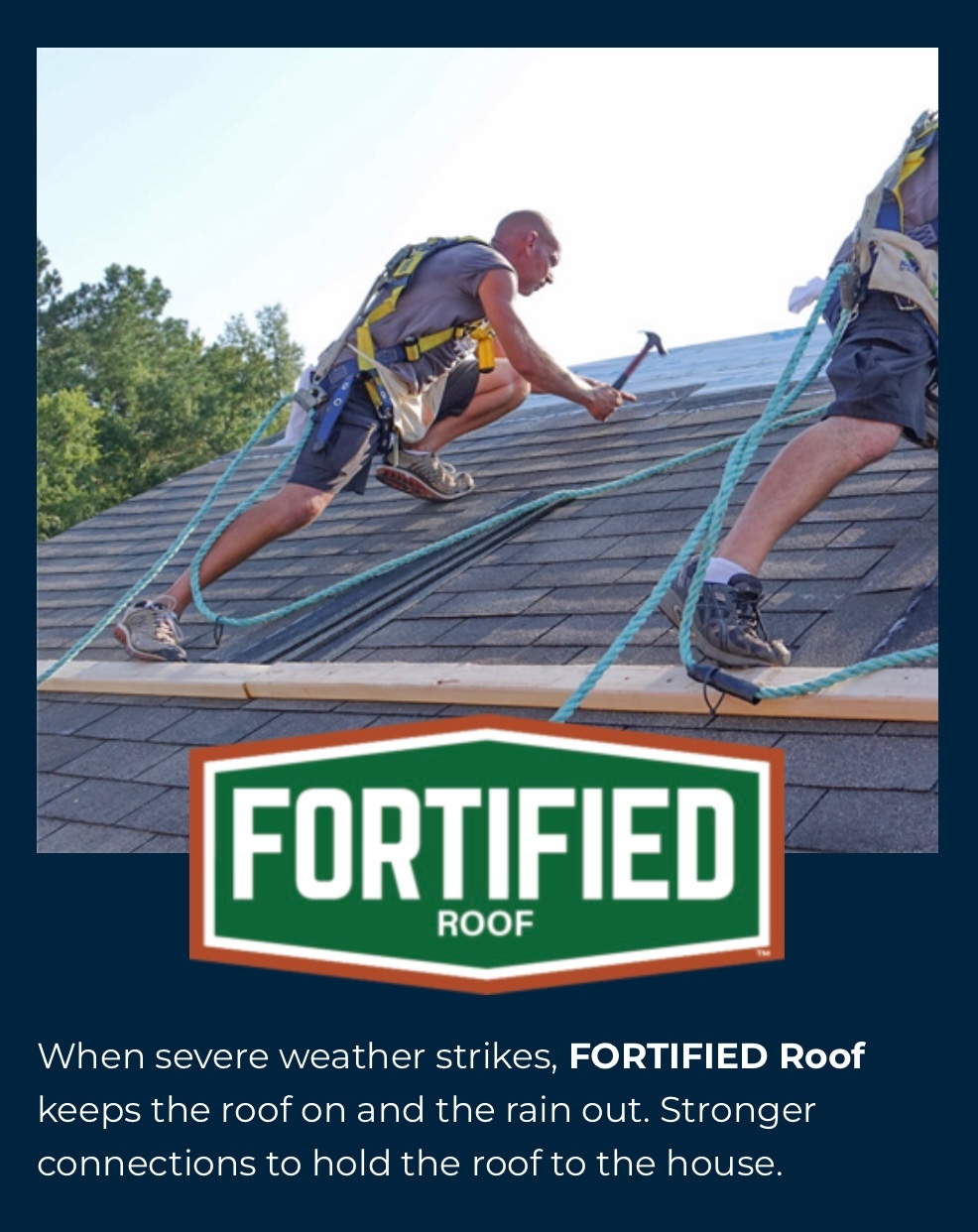
It's a strong roofing system. It's that simple.
Stronger Edges
Roof damage often begins when wind gets underneath the roof edge and begins ripping it away from the home. To help protect this vulnerable area, FORTIFIED requires specific materials and installation methods, including a wider drip edge and a fully adhered starter strip, that when used together create a stronger system.
sealed roof deck
If wind rips off your roof covering―such as shingles, metal panels or tiles―it exposes the wood beneath and allows water to pass through the gaps and enter your home. FORTIFIED requires roof decks to be sealed to prevent this type of water damage.
Better Attachement
Instead of common smooth nails, FORTIFIED requires ring-shank nails, installed in an enhanced pattern, to help keep the roof deck attached to your home in high winds. In fact, using ring-shank nails nearly doubles the strength of your roof against the forces of winds.
IMPACT-RESISTANT SHINGLES
In hail-prone areas, homeowners are encouraged to opt for the Hail Supplement to their FORTIFIED designation. To achieve this added level of protection, shingles must score Good or Excellent on the IBHS Hail Impact Ratings. These outperform typical Class 4 shingles when tested against realistic hailstones and will better protect your home from hail up to 2” in diameter.